
Introduction: A New Era of Humanoid Robotics
The robotics industry has entered a transformative phase with the introduction of the PUDU D9, the first full-sized bipedal humanoid robot developed by Pudu Robotics. Known globally for its service and commercial robots, Pudu Robotics has taken a bold leap forward with the D9—bringing human-like mobility, advanced AI, and real-world usability into a single humanoid platform.
Designed to operate seamlessly in human environments, the PUDU D9 represents a major milestone in the evolution of intelligent service robots.
What Is the PUDU D9 Humanoid Robot?
The PUDU D9 is a full-scale humanoid robot built to replicate human posture, walking patterns, and task execution. Unlike wheeled or semi-humanoid robots, the D9 features true bipedal locomotion, allowing it to navigate stairs, slopes, and complex indoor environments designed for humans.
This innovation positions the PUDU D9 as a next-generation solution for industries seeking automation without redesigning existing infrastructure.
Key Features of the PUDU D9
1. Full-Sized Bipedal Design
The PUDU D9 stands at a human-like height, enabling natural interaction and ergonomic task performance. Its bipedal structure ensures:
- Natural walking and balance
- Smooth navigation in human-centric spaces
- Improved adaptability compared to wheeled robots
2. Advanced AI and Perception
Powered by cutting-edge artificial intelligence, the PUDU D9 integrates:
- Computer vision for environment recognition
- Multi-sensor fusion for obstacle avoidance
- Real-time decision-making capabilities
These features allow the robot to operate safely and autonomously in dynamic environments.
3. Dexterous Manipulation
With articulated arms and hands, the D9 can perform precise tasks such as:
- Carrying objects
- Operating tools
- Interacting with equipment and users
This makes it suitable for service, logistics, and light industrial applications.
4. Human-Robot Interaction (HRI)
The PUDU D9 is designed for intuitive communication, supporting:
- Voice interaction
- Visual feedback
- Gesture-based responses
This enhances user trust and usability in public and professional settings.
Applications of the PUDU D9 Humanoid Robot
Commercial & Service Industries
- Hotels and hospitality
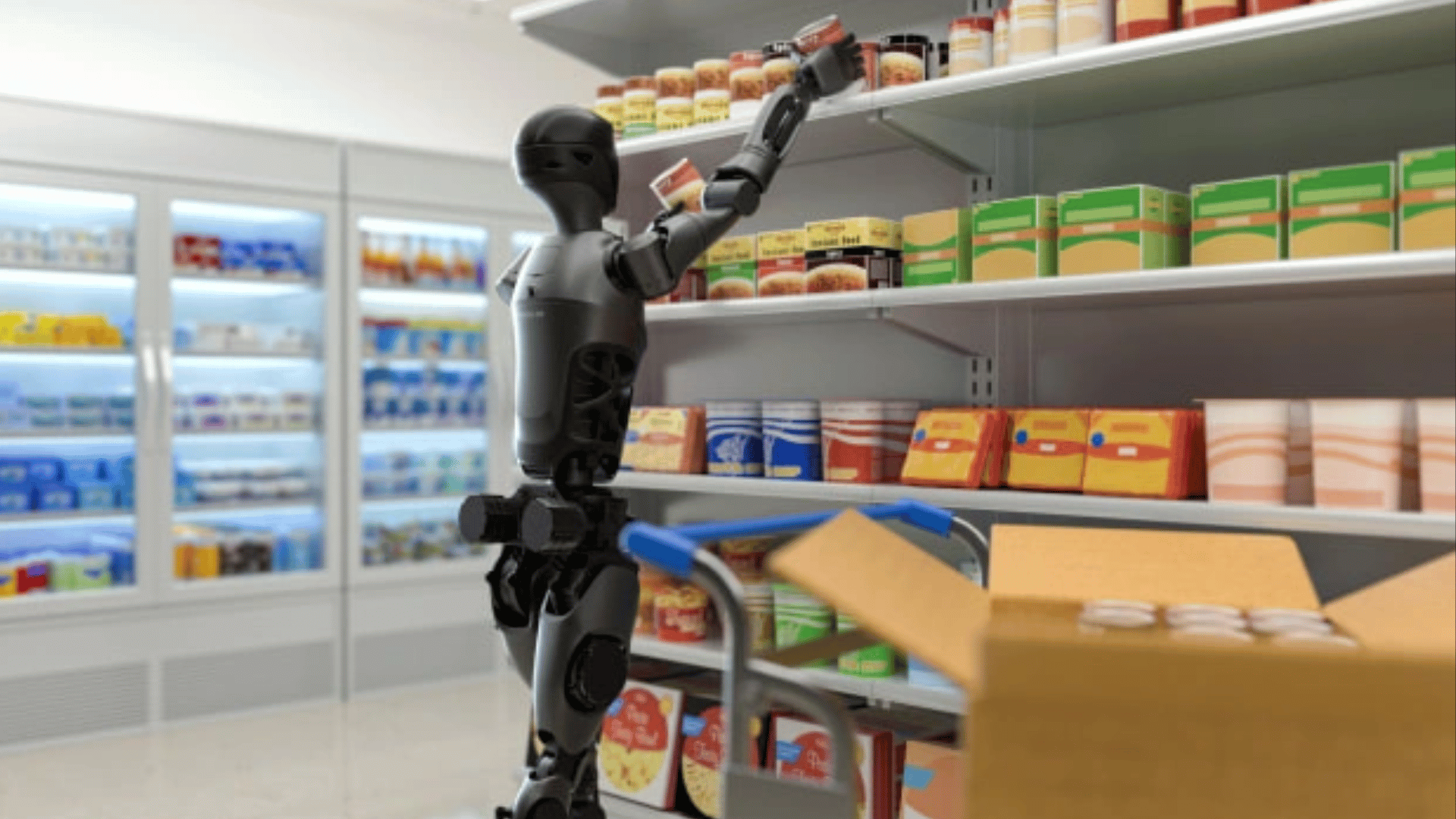
- Retail stores and shopping malls
- Corporate offices and reception areas
Healthcare & Elder Care
- Assistance for medical staff
- Support for elderly care facilities
- Safe delivery of supplies
Education & Research
- Robotics and AI research
- STEM education and demonstrations
- Human-robot interaction studies
Smart Manufacturing & Logistics
- Light material handling
- Inspection and monitoring
- Human-robot collaborative tasks
Why the PUDU D9 Is a Game-Changer
The PUDU D9 stands out because it bridges the gap between experimental humanoid robots and practical, deployable solutions. Its full-sized, bipedal form allows it to integrate naturally into environments built for humans—without costly modifications.
By combining mobility, intelligence, and usability, Pudu Robotics positions the D9 as a foundation for the future humanoid workforce.
The Future of Humanoid Robots with Pudu Robotics
With the launch of the PUDU D9, Pudu Robotics signals a long-term commitment to humanoid innovation. As AI models, battery technology, and robotic dexterity continue to evolve, the D9 is expected to expand its capabilities across industries.
This development marks a significant step toward a future where humanoid robots work safely alongside humans, enhancing productivity and quality of life.
Conclusion
The PUDU D9, the first full-sized bipedal humanoid robot, is more than a technological showcase—it’s a practical leap forward in robotics. With its human-like mobility, intelligent perception, and versatile applications, the D9 sets a new benchmark for what humanoid robots can achieve today and in the years ahead.
As industries worldwide embrace automation, the PUDU D9 stands at the forefront of the humanoid robotics revolution.
